
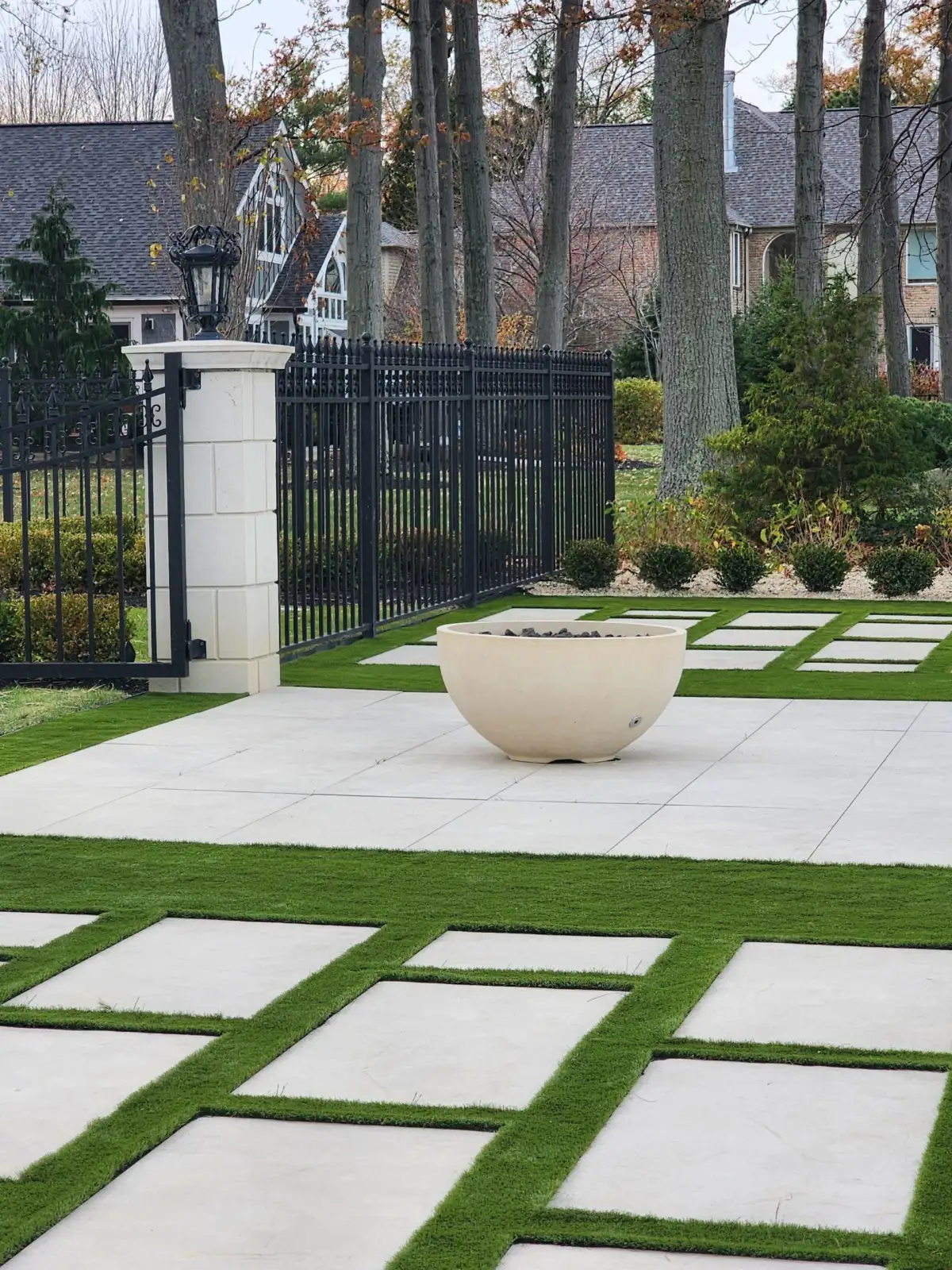
Synthetic Turf for Cleaner, Lower-Maintenance Outdoor Spaces
A.J. Kraig installs synthetic turf for homeowners and properties that want a cleaner surface without weekly mowing, mud, or thin grass.
Synthetic turf solves specific maintenance problems
Synthetic turf is not for every yard, but it is a strong solution for areas where natural grass struggles. Shade, pet traffic, narrow side yards, wet spots, heavy foot traffic, and small urban lawns can be difficult to maintain with living turf. A.J. Kraig helps clients decide where artificial grass makes sense and where natural landscaping should remain.
A good turf installation depends on base preparation, drainage, seams, infill, edge restraint, and matching the turf product to the use. Pet spaces, play areas, putting surfaces, and decorative lawn replacements all have different priorities. We plan the system around the actual use instead of treating turf as a simple carpet.
For Northeast Ohio properties, drainage and freeze-thaw movement matter. The base must move water, stay stable, and transition cleanly to patios, beds, walks, and fences. Done correctly, synthetic turf can reduce maintenance while keeping the space usable after rain.
Synthetic turf planning factors
The product, base, edge, drainage, and use case all shape the final installation.
Use case
Pet areas, play spaces, decorative lawns, and commercial accents need different turf and infill choices.
Drainage base
A properly prepared base moves water and keeps the surface stable through changing weather.
Clean edges
Transitions to beds, pavers, fences, and walks determine whether the finished turf looks intentional.
Where synthetic turf works well
Synthetic turf is useful in high-wear areas where living grass repeatedly fails or creates maintenance frustration. It can provide a mud-free pet zone, a small putting or play surface, a clean side yard, or a low-maintenance accent around outdoor living spaces. The best projects are honest about what turf should and should not do.
A.J. Kraig can coordinate turf with drainage, hardscape, pet use, putting features, edging, and surrounding plantings. We also discuss heat, cleaning, infill, traffic, and maintenance expectations so clients understand the surface before installation.
- Pet yards - Cleaner surfaces with drainage and infill choices suited to pet use.
- Small lawns - Low-maintenance green areas where mowing is impractical.
- Play spaces - Consistent surfaces for family use with appropriate base and padding discussions.
- Side yards - Mud-prone or narrow spaces converted to cleaner access routes.
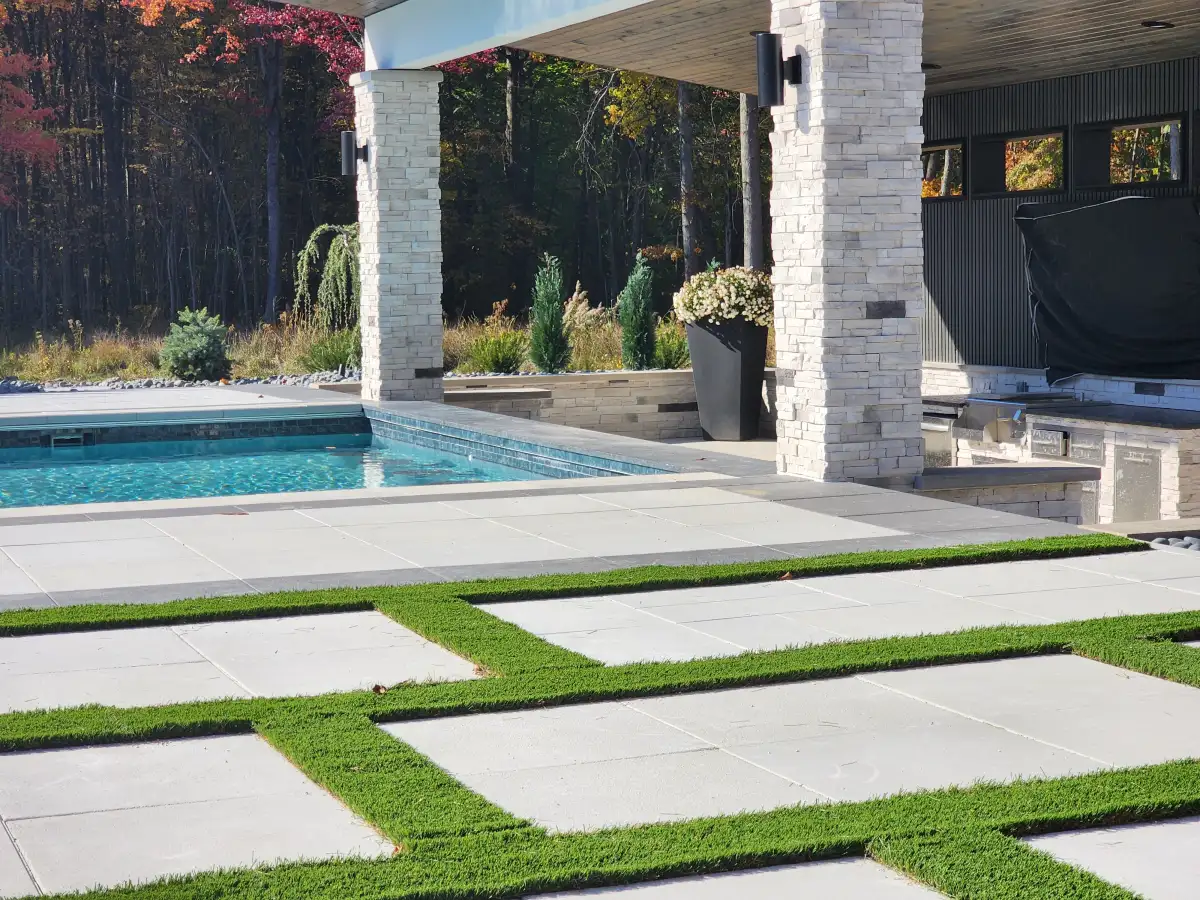
- Outdoor living edges - Turf integrated around patios, pools, seating areas, or walkways.
- Commercial accents - Low-maintenance green zones near entrances, courtyards, or high-visibility areas.
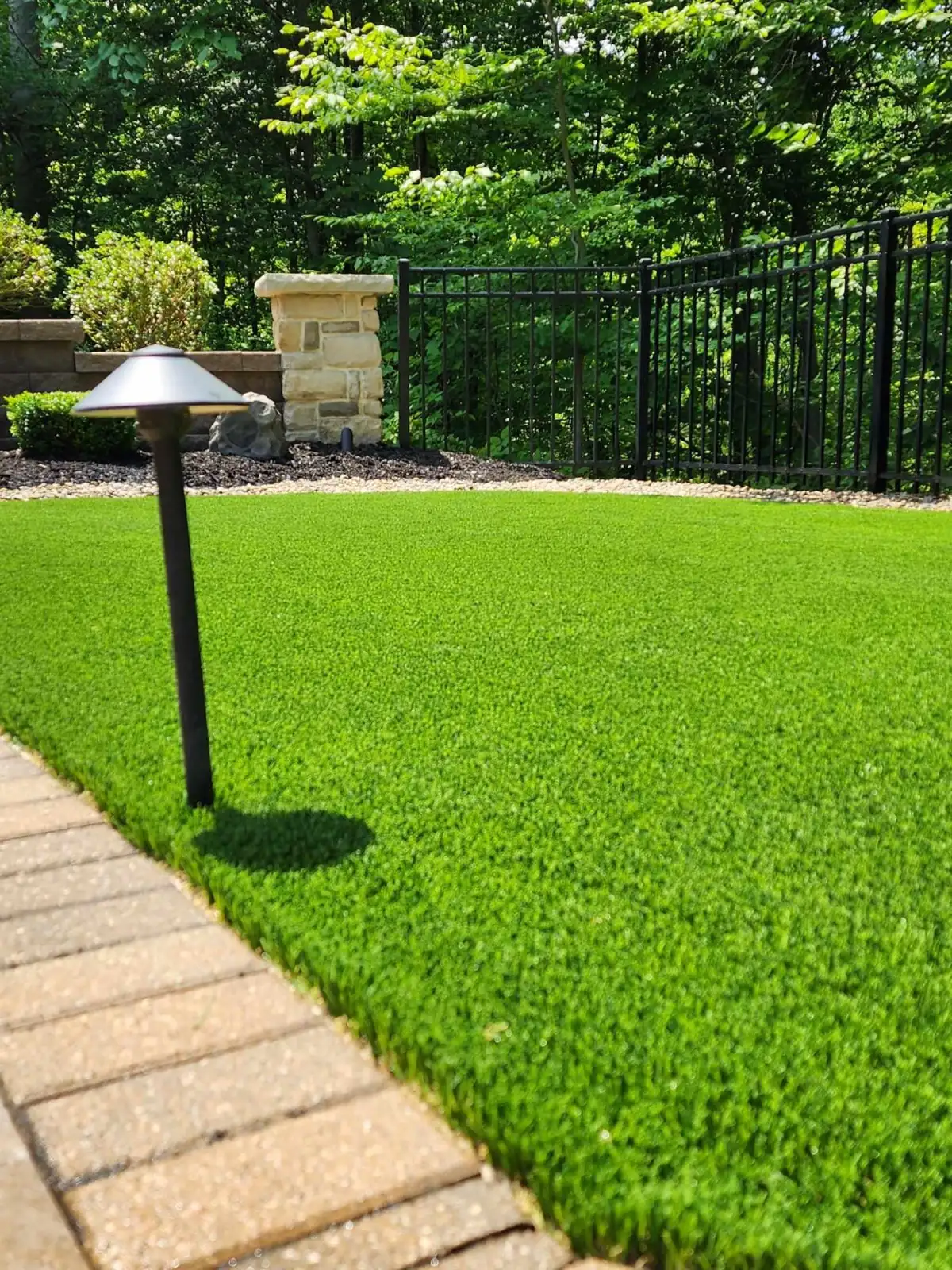
Planning Turf Around Use and Maintenance
Synthetic turf can solve mud, pet traffic, shade, small-lawn maintenance, and high-use areas where natural grass will not stay clean. A.J. Kraig evaluates pet yards, side yards, shaded lawns, play spaces, commercial accents, and failed grass areas to determine whether turf is the right surface.
The base matters as much as the visible turf. Base depth, water movement, pet cleaning, edge restraint, seam layout, heat exposure, infill, and transitions to beds or pavers all affect how the surface looks and drains over time.
Site preparation usually includes removing failed grass, correcting grade, building a drainage base, and choosing a turf product suited to the use. Local access, clay soil, shade, slope, and weather can influence installation timing across Northeast Ohio properties.
Pet turf, putting surfaces, patios, drainage, edging, planting, and commercial landscape accents often connect to synthetic turf decisions. Coordinating those elements helps the finished surface fit the surrounding landscape instead of looking isolated.
Synthetic Turf FAQ
Yes, when installed over the right base and with a turf product designed for drainage. Base preparation is essential for pet areas and wet locations.
No surface is truly maintenance-free. Turf may need rinsing, brushing, debris removal, and occasional infill attention depending on use.
Yes. Pet turf requires drainage planning, appropriate infill, odor-control practices, and cleaning expectations that differ from decorative turf.
Modern products can look very natural when the turf style, blade height, color blend, and installation details match the setting.
Synthetic turf should be chosen for the exact use
The right synthetic turf for a pet area is not always the right choice for a decorative courtyard or a small play space. Blade height, backing, drainage rate, infill, feel underfoot, and cleaning requirements all change with the use. A.J. Kraig discusses those differences before recommending a product.
The surrounding landscape matters too. Turf next to pavers, mulch beds, fences, or drainage areas needs clean transitions and a base that moves water. Planning those edges keeps the finished space from looking like an isolated patch and makes routine cleaning easier.
Fix the area where grass keeps failing
A.J. Kraig can review the space and explain whether synthetic turf, natural turf repair, or another landscape solution is the right fit.